
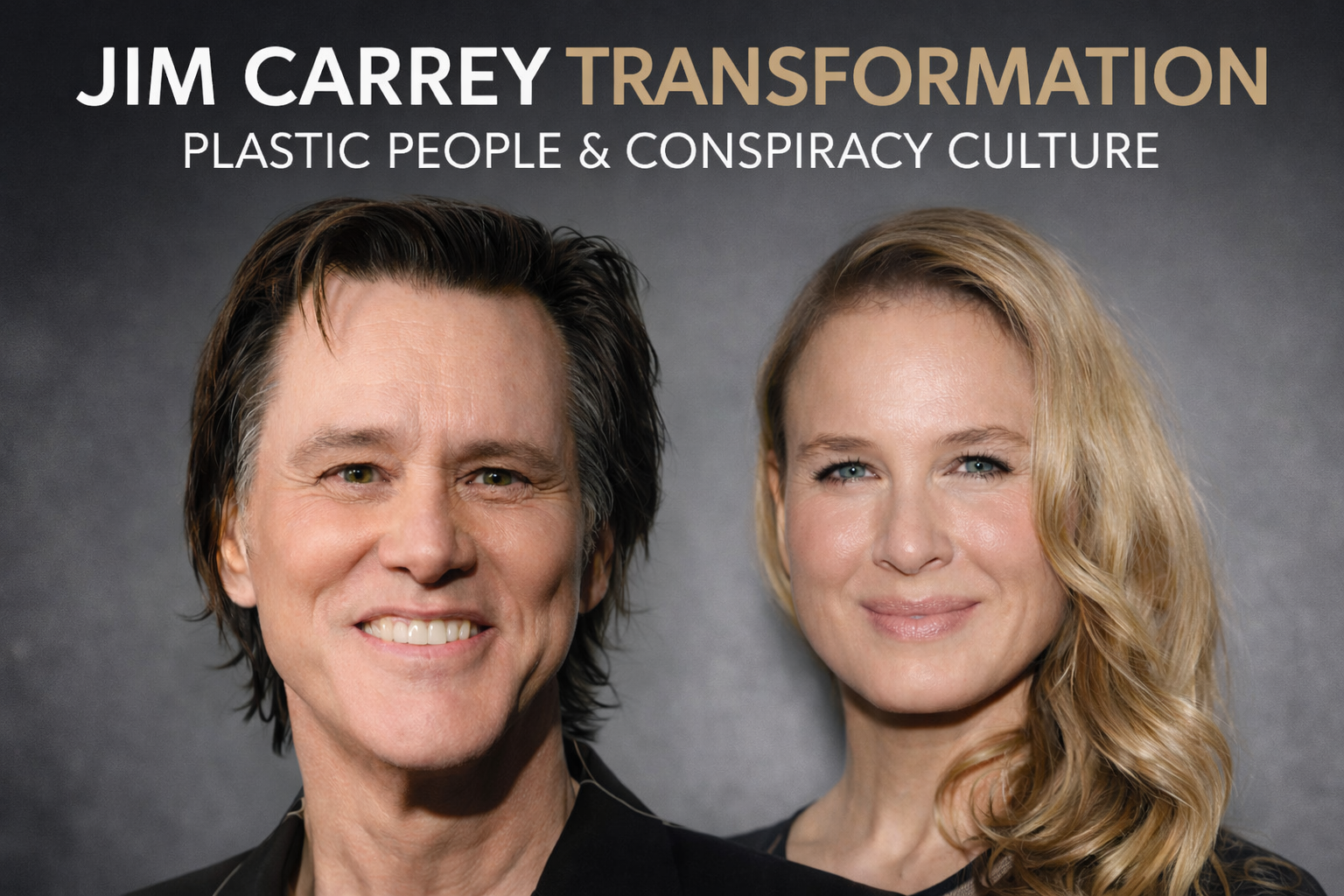
Jim Carrey is back in the headlines. Not for a film. Not for comedy. For his face.
Recent public appearances sparked speculation that he has undergone significant cosmetic procedures. The conversation online quickly turned from curiosity to conspiracy. Is it really him? Did he “replace himself”? Has Hollywood gone full synthetic?
What’s interesting isn’t whether he had work done. Hollywood has always done work. What’s interesting is the response.
Just a few years ago, his co-star from Me, Myself & Irene, Renée Zellweger resurfaced after a long break with a noticeably altered appearance. The public reaction was sharp, but it stayed in the realm of celebrity gossip. Commentary centered on beauty standards, pressure in Hollywood, and whether she “looked like herself.”
With Jim Carrey, the tone feels different. The response is darker, more conspiratorial, more suspicious. The online discourse includes identity replacement theories, deepfake speculation, cloning jokes that don’t entirely feel like jokes, and a distrust of media framing.
We are no longer just a culture that critiques beauty standards. We are a culture primed for suspicion.
That matters.
Short Memory. Synthetic World.
We shouldn’t be surprised by physical transformation in Hollywood. Cosmetic surgery is deeply normalized in the entertainment industry. According to the American Society of Plastic Surgeons, over 1.5 million cosmetic surgical procedures are performed annually in the United States alone, not including minimally invasive treatments like Botox and fillers, which number in the millions more each year. Public image is currency. Faces are brands.
But we forget quickly.
We forget how common transformation is because our attention cycles reset every few weeks. Cognitive science calls this recency bias and availability heuristic. We overweight what is immediately in front of us and underweight historical precedent. In a hyper-digital environment, outrage has a half-life.
We scroll. We react. We forget.
And who are we to judge?
We eat from plastic containers.
We drink from plastic bottles.
We scroll plastic screens.
We “like” plastic-enhanced bodies filtered into digital perfection.
The plastic isn’t just on their faces. It’s in our hands. In our kitchens. In our bloodstream.
Studies have now detected microplastics in human blood, placental tissue, and even lung samples. We are physically integrating synthetic material into our biology. At the same time, we are psychologically integrating synthetic imagery into our self-perception.
This isn’t just about aesthetics anymore. It’s neurological and psychological.
Elites and Body Manipulation Are Nothing New
Before we act like this is some unprecedented fall from grace, let’s zoom out.
Historically, elites have always manipulated the body to signal power, divinity, or distinction.
1. The Pharaohs of Ancient Egypt


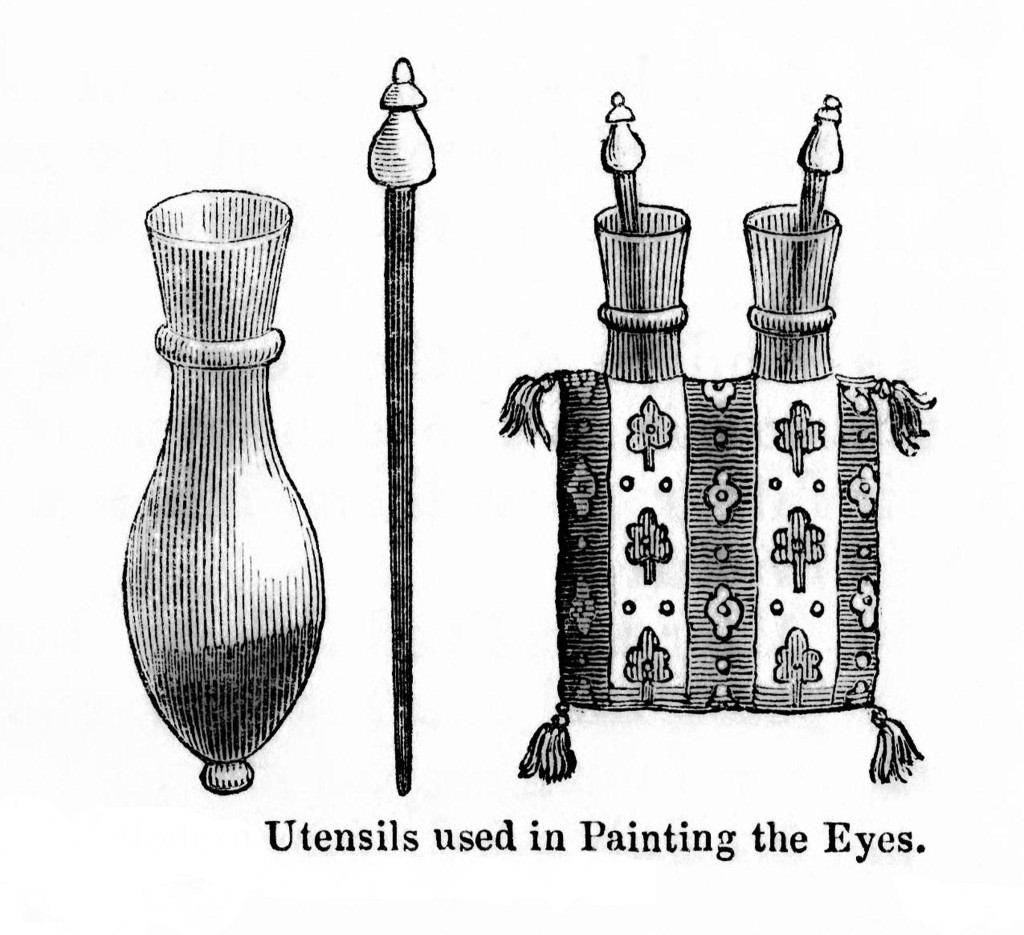
In ancient Egypt, Pharaohs were not merely rulers; they were divine intermediaries between gods and humans. Artistic depictions deliberately idealized them. Statues and reliefs exaggerated symmetry, posture, musculature, and facial proportions to communicate supernatural authority.
Cosmetics were also political. Kohl eyeliner was worn by both men and women of elite status. It was not only aesthetic; it symbolized power, protection, and alignment with the gods Horus and Ra. Body presentation reinforced divine narrative.
Identity was curated.
2. Cranial Modification in Mesoamerica


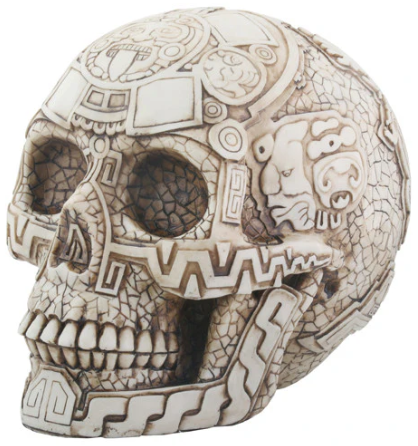
Among the Maya and other Mesoamerican civilizations, intentional cranial deformation was practiced by elites. Infants’ heads were gently bound to shape the skull into elongated forms. This signaled status, beauty, and sometimes spiritual alignment.
Body alteration was cultural capital.
3. Roman and Greek Grooming



In ancient Greece, the idealized male form was sculpted into marble as a representation of virtue and excellence. The word kalokagathia fused beauty and moral goodness. Physical perfection signaled internal superiority.
In Rome, elite grooming rituals included hair removal, skin treatments, and cosmetic enhancement. Public image was tied to political credibility.
None of this is new.
What is new is scale. Speed. And saturation.
The Psychological Shift: Why the Reaction Feels Different Now
Why did Renée Zellweger’s transformation spark aesthetic commentary, while Jim Carrey’s sparks identity suspicion?
We are living in an era of heightened institutional distrust. According to longitudinal surveys from Pew Research, trust in media, government, and major institutions has steadily declined over the last two decades. Add to that the rise of deepfake technology, AI-generated imagery, and algorithmic echo chambers, and you have a population primed for doubt.
Psychologists describe this as conspiratorial ideation: a cognitive style characterized by pattern seeking, agency detection, and suspicion of official narratives. When institutions feel opaque, people fill in gaps with narratives that restore perceived control.
There is also cognitive dissonance at play. Jim Carrey has publicly expressed unconventional spiritual and philosophical views in recent years. When a figure already associated with non-mainstream perspectives appears physically altered, the mind looks for coherence. If he speaks outside the system and now looks altered by the system, the brain tries to reconcile the tension.
The resolution for some is: something deeper is happening.
Add social media amplification and availability cascades, and fringe speculation gains visibility quickly.
We are more conspiratorial now because our environment rewards suspicion. Suspicion spreads faster than nuance.
Plastic as Metaphor
This is where it matters for the cave.
Rather than obsessing over celebrity faces, ask the harder question.
How much are you integrating plastic into your own life? Not surgically, but systematically.
Nutritional Plastic
Ultra-processed foods are often packaged in plastic and contain additives, emulsifiers, stabilizers, and synthetic flavor enhancers. Research links high consumption of ultra-processed foods to increased risk of metabolic syndrome, obesity, and cardiovascular disease. Many of these products are engineered for hyper-palatability, which activates dopaminergic reward pathways similar to addictive substances.
Plastic isn’t just the container. It’s the system of consumption.
Mental Plastic
We scroll images of surgically enhanced bodies, filtered faces, algorithmically optimized physiques. Over time, this distorts baseline perception. Psychologists refer to this as normative discontent and social comparison theory in action. When your reference group becomes digitally altered humans, dissatisfaction increases.
Body dysmorphic tendencies rise. Attention spans fragment. Dopamine spikes shorten.
You don’t need surgery to become plastic. Mental immersion cuts deeper than any surgical knife.
Behavioral Plastic
We hold devices for hours per day. Blue light exposure impacts melatonin production. Continuous notifications fragment cognitive focus. Neuroplasticity means the brain adapts to repeated patterns. When those patterns are shallow scrolling, outrage cycles, and constant novelty, the brain becomes wired for distraction.
Plastic reshapes more than faces. It reshapes our attention.
Plastic Is Not the Enemy. Passivity Is.
Body manipulation by elites is ancient. Image curation is ancient. Symbolic enhancement is ancient.
What is dangerous is not that plastic exists. It’s that we absorb it consistently and unconsciously. If you want to fight the ways of plastic people, start in your own life. In your own cave.
Reducing Plastic Integration
Keep it practical. Keep it grounded.
1. Remove plastic from your kitchen.
Shift to glass, stainless steel, cast iron. Heat accelerates chemical leaching from certain plastics. Stop microwaving in plastic.
2. Eat food that looks like food.
Protein from eggs, fish, meat, legumes. Produce without barcodes when possible. Fewer ingredients, fewer problems.
3. Limit digital plastic.
Set structured scroll windows. No phone the first 60 minutes after waking. Protect dopamine rhythm.
4. Train your body in reality.
Lift iron. Sprint hills. Walk outside. Sunlight regulates circadian rhythm and increases nitric oxide release in the skin, supporting vascular health.
5. Audit your inputs.
Ask yourself daily: Is this synthetic or real? Is this enhancing my humanity or diluting it?
6. Practice embodied presence.
Breathwork. Cold exposure. Face-to-face conversation. Physical books. Sensory engagement rewires neural circuits toward grounded awareness.
You may never alter your face. But if you allow synthetic food, synthetic narratives, synthetic bodies, and synthetic attention cycles to dominate your life, you are still being reshaped, molded by the norm, and conformed to the ways of plastic people.
Fight for authenticity.
Fight to remain human in a world increasingly comfortable with plastic.
Because once you normalize the artificial in every domain, you stop recognizing the real when you see it.
Keep it Cave.