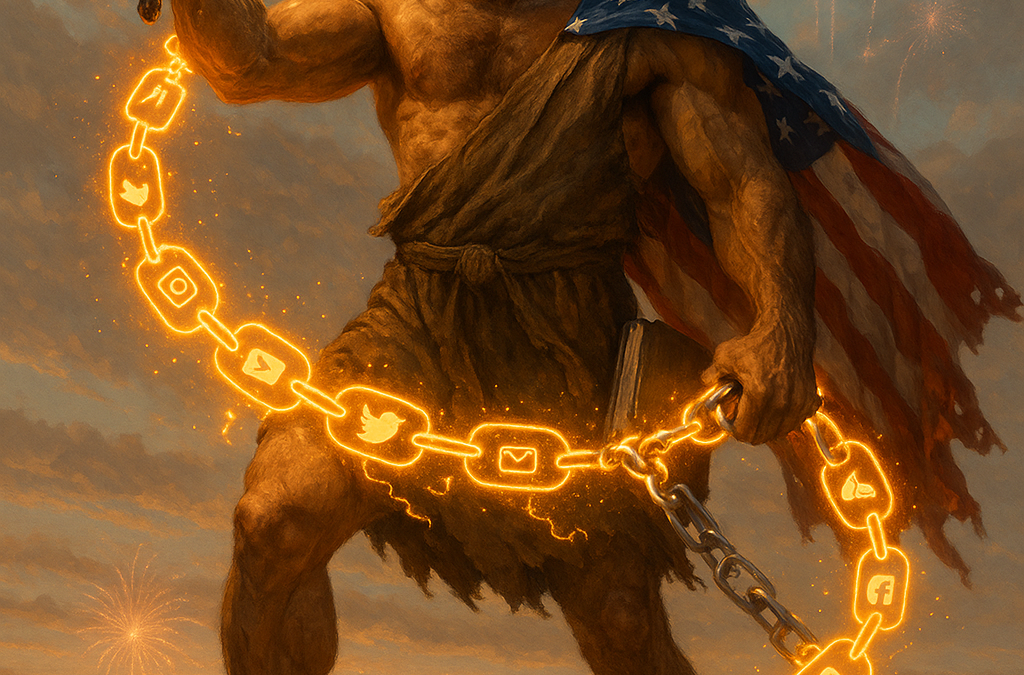
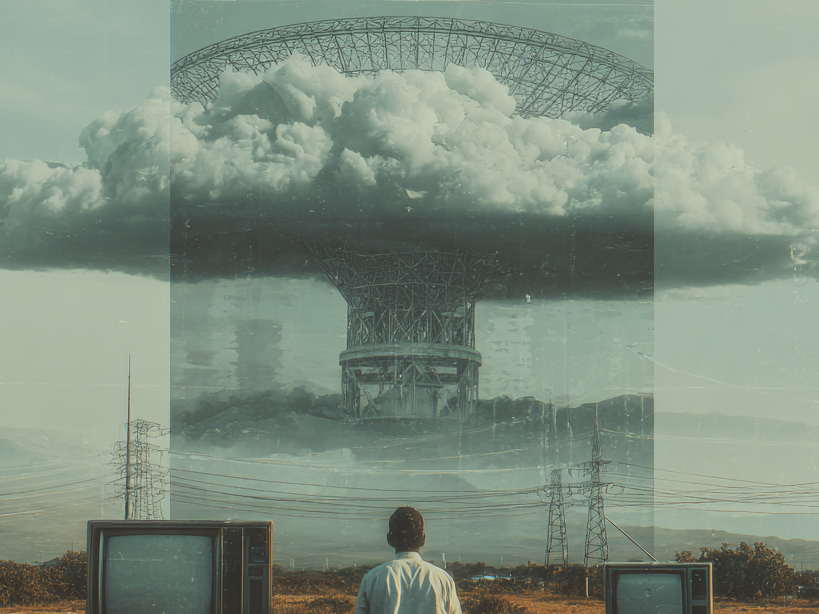
Living in California has given me front row seats to both the most breathtaking beauty and the most sobering decline of modern man.
I’ve watched the sun set behind Mount Diablo as golden light bleeds into rolling fog, turning the Bay into a living painting—something straight out of a Thomas Kinkade scene. I’ve stood among the towering pines of the Sierras where dense forests crash into fertile Mediterranean plains, and I’ve driven Highway 1, where jagged coastal cliffs wind through sleepy seaside towns, waves pounding ancient stone like a heartbeat older than language.
And I’ve also walked through Los Angeles, San Francisco, and Oakland.
Tent cities sprawled beneath freeway overpasses. Bodies folded over in chemical submission. Liquor stores every few blocks, doors opening early, lines forming fast. People in wheelchairs sit bundled up outside, not waiting for food or medicine—but for the next bottle that quells the noise inside their minds.
Anyone who’s traveled through an airport early in the morning has seen the same thing. It’s 8 a.m., and the bar is already full. Vodka sodas lined up. Eyes glazed. Jokes exchanged to normalize the abnormal. Addiction, after all, is almost never obvious to the one suffering from it.
But while these scenes are the most glaring, the truth is more uncomfortable:
We all suffer from the same disease now.
We Have De-Natured Ourselves
It was in Delmer Eugene Croft’s early 20th-century work Supreme Personality that I first encountered the phrase:
“We have de-natured ourselves.”
If Croft thought humanity was de-natured then, I can only imagine what he’d say now.
Yes, substance addiction is rampant. But something far more pervasive has quietly taken hold—device addiction.
Look around. In any coffee shop, airport, sidewalk, or waiting room, nearly everyone is bent forward, neck craned down, eyes locked onto glowing rectangles. We carry small computers everywhere, and they carry us—our attention, our mood, our sense of self.
Less than two decades ago, we lived full lives without these devices. Now many of us can’t go minutes—let alone hours or days—without checking them.
This isn’t a failure of discipline. It’s biology.
Dopamine, Wiring, and the Hijacked Brain
All addiction shares the same root: dopamine.
Dopamine isn’t pleasure—it’s anticipation. It’s the brain’s “pay attention, this matters” chemical. It evolved to reward behaviors that supported survival: seeking food, exploring territory, bonding with others, learning through effort.
Modern devices exploit this system with ruthless efficiency.
Every notification, like, scroll, reel, and short delivers a variable dopamine reward—the same mechanism used in slot machines. Your brain doesn’t know when the reward is coming, only that it might. That uncertainty is what keeps you hooked.
Over time, this rewires the brain:
- Baseline dopamine levels drop
- Focus and patience decline
- Real world rewards feel dull
- Stillness becomes uncomfortable
- Silence feels threatening
What once brought fulfillment—a long walk, a good book, deep conversation, creative thought—now feels insufficient. The brain has been trained to crave faster, louder, easier stimulation.
Hugs from people you love get replaced by likes from people you don’t know.
Wisdom earned through reading and reflection gets replaced by snack-sized fragments of information—often false, manipulative, and designed to steer your beliefs without your consent.
True presence is traded for endless distraction.
And here’s the hardest truth:
You may not be slumped over on a street corner—but from the standpoint of a fully lived human experience, the cost is strikingly similar.
Nature vs. the Screen
The human brain did not evolve indoors.
It evolved under sunlight.
In silence.
In movement.
In unpredictability.
In nature.
Time in natural environments has been shown to:
- Lower cortisol (stress hormone)
- Restore attention and executive function
- Increase creativity and problem solving
- Improve mood and emotional regulation
- Normalize dopamine signaling
Nature doesn’t spike dopamine—it resets it.
Devices do the opposite. They fragment attention, shorten thought loops, and keep the nervous system in a constant low-grade state of alert.
The result is a generation overstimulated, underfulfilled, and quietly exhausted.
The Good News: You Can Re-Wire
The brain is plastic. It adapts to what you repeatedly do.
You can continue short circuiting it with constant stimulation…
Or you can reclaim your wiring.
You don’t need the device.
You can function without it.
And deep down, you remember that.
Ask yourself: Who are the happiest, most peaceful people I know?
For me, it’s my father-in-law, my four-year-old son, and my ten-year-old daughter.
They’re creative. Curious. Present. Alive.
My kids—because they don’t yet own devices.
My father-in-law—who embodies wisdom through a life grounded in books, meaningful work, and time spent in nature, never needing a device to give his life depth.
I’ve watched the shift firsthand. When my thirteen-year-old daughter got her phone, her time in nature declined. Her creativity-driven projects less frequent. Not because she’s broken—but because the wiring changed.
A Personal Stand
This morning, I made a decision.
As I got out of bed, I told myself: I’m not even going to look at it today.
I walked downstairs, grabbed a paper plate, and wrote:
“TAKE BACK YOUR MIND.”
That’s where my phone sat—all day. Powered down.
A message to myself. And to anyone who saw it.
Yes, the device is useful for business. But my primary business in life is with myself—and with the people I love. Presence, attention, and living in my true nature matter more than anything I could possibly consume from a screen.
This Week’s Cave Challenge
Take a hard stance.
Choose a block of time—a full day if you can—where your device is powered down and out of reach.
No “just checking.”
No exceptions.
No negotiations with the voice in your head.
Fast from the dopamine machine.
Go outside.
Walk without headphones.
Read a physical book.
Write.
Draw.
Build something.
Make music.
Use a paper map.
Let yourself be unplugged long enough for creativity to return.
Recall what it felt like to be childlike—when the world was full of wonder and time felt expansive.
To Lose is to Gain
Sometimes losing your way is how you find it again.
Sabbatical—stepping away—was once an ancient practice of renewal. We’ve forgotten it. But you can revive it, starting with the most obvious source of manipulation we carry in our hands every day.
Set it down.
Find yourself.
Re-wire your mind.
And repeat often.
Take back your mind.
Keep it Cave.